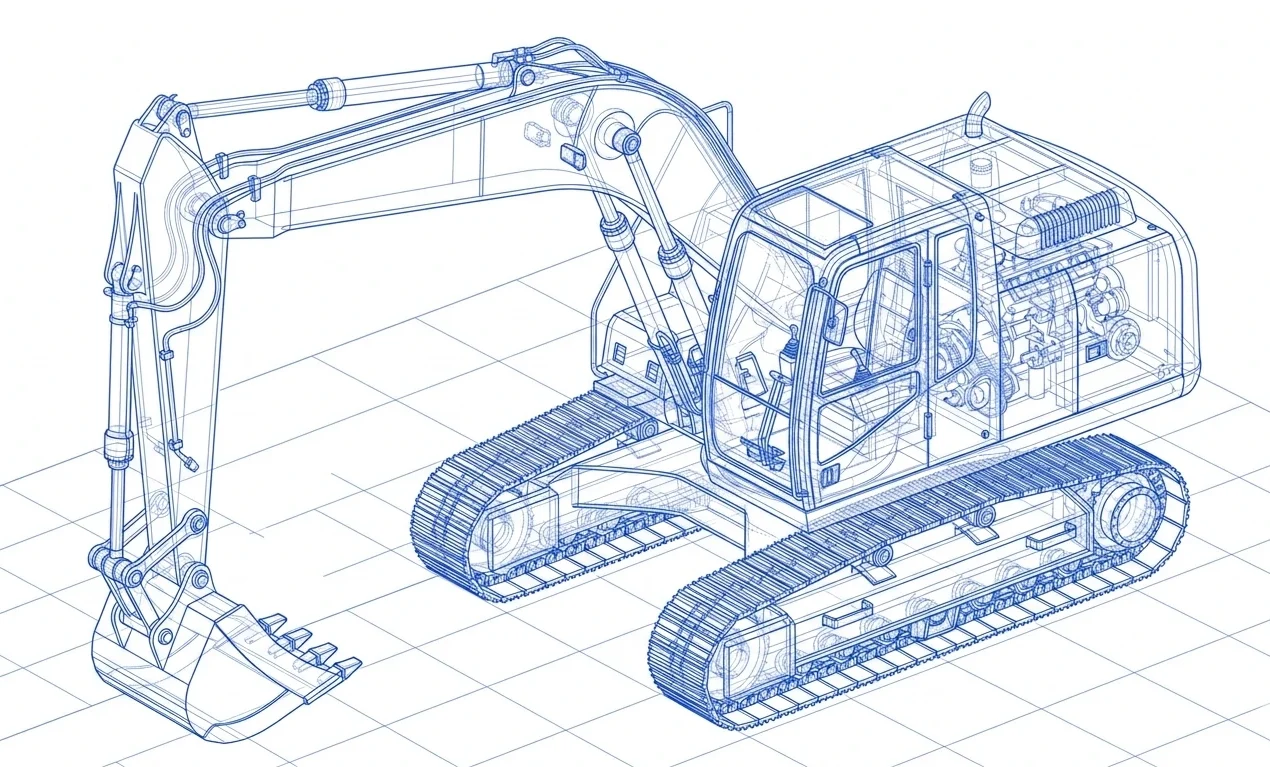




Heavy construction equipment operates under demanding conditions. Excavators, wheel loaders, bulldozers and other off-highway machines must transmit high torque while handling changing loads, vibration, dust and extended operating hours. Their power-transmission systems must balance strength, efficiency, durability and reliability.
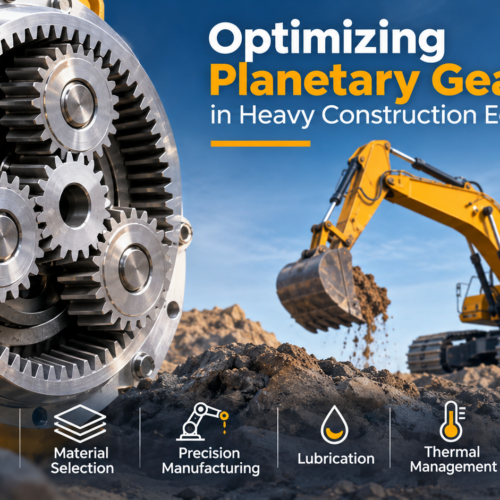
Planetary gearboxes are widely used in applications that require substantial torque transmission within a compact arrangement. Their design distributes power through multiple planet gears working between a central sun gear and an outer ring gear. Depending on the configuration, planetary gear systems can provide different reduction ratios while keeping the overall assembly relatively compact.
However, a planetary gearbox’s performance depends on more than its basic design. Load distribution, gear materials, manufacturing processes, lubrication, temperature control, inspection and maintenance all influence how the assembly performs over time.
Optimizing planetary gearboxes in heavy construction equipment means addressing these factors together, from the initial design and component selection through manufacturing and field operation.
1. Understand How a Planetary Gearbox Works
A planetary gearbox typically consists of three principal gear elements and a supporting carrier.
- Sun gear: The central gear that meshes with the surrounding planet gears.
- Planet gears: Gears that mesh with the sun gear and ring gear while rotating on pins supported by the carrier.
- Ring gear: The outer gear with internal teeth that engages with the planet gears.
- Planet carrier: Supports the planet gear pins and transfers motion according to the gearbox configuration.
The input, output and stationary member can vary depending on the arrangement. This flexibility allows planetary gear systems to deliver different speed reductions and torque characteristics.
In heavy construction equipment, planetary gear arrangements can be used in final drives, travel drives, wheel drives and other power-transmission applications. The specific configuration depends on the machine, available space, required torque and operating conditions.
Because multiple gear meshes operate within a compact assembly, the interaction between individual components is important to overall gearbox performance.
2. Optimize Load Distribution Across Planet Gears
Load distribution is an important consideration in planetary gearbox design. Although multiple planet gears can share transmitted torque, the load is not always divided equally between them.
Manufacturing variation, shaft or carrier deflection, bearing clearances, assembly alignment and differences in component geometry can cause some planet gears to carry more load than others.
Uneven loading may increase local tooth stress and contribute to wear, fatigue or vibration.
Key considerations for improving load sharing
- Review the gear arrangement: The number and placement of planet gears should suit the intended torque, reduction ratio and packaging requirements.
- Account for structural deflection: Shafts, carriers and supporting structures should be evaluated under expected operating loads.
- Evaluate bearing support: Bearing selection, clearances and support stiffness influence how the gears remain positioned under load.
- Consider assembly alignment: The sun gear, planet gears and ring gear must work together within the intended geometric arrangement.
- Assess the operating duty cycle: Repeated shock loads, changes in torque and continuous heavy-duty operation can affect how the system distributes load.
The objective is not simply to increase the number of planet gears. The complete arrangement must be designed to distribute load as intended under the equipment’s operating conditions.
3. Select Suitable Gear Materials and Manufacturing Processes
Planetary gearbox components experience repeated contact and bending stresses during operation. In construction equipment, changing loads and shock inputs can add to these demands. Material selection and manufacturing processes should therefore match the component’s geometry, duty cycle and performance requirements.
Material selection
Engineers may evaluate carbon steel or alloy steel grades according to strength, hardenability, toughness, fatigue requirements and the intended heat-treatment route.
The appropriate material depends on several factors:
- Expected torque and tooth loading.
- Gear dimensions and cross-sectional thickness.
- Required wear resistance and fatigue performance.
- Operating temperature and lubrication conditions.
- Applicable component specifications and service-life targets.
Material selection should be supported by the relevant material specification and documentation rather than relying on a general grade description alone.
Forging and gear blank preparation
Where specified, forging can establish the initial shape of a gear blank before subsequent machining. The process must be appropriate for the component design and selected material.
Following forging, operations such as trimming, shot blasting and pre-machining may be used as required to prepare the component for further manufacturing.
Gear cutting and finishing
The gear teeth must be produced using a process suited to the gear geometry, production volume and required accuracy.
- Gear hobbing: Generates teeth on suitable gear blanks and is commonly used for external cylindrical gears, including appropriate spur and helical designs.
- Broaching: Produces specified internal profiles, splines or other suitable forms, depending on the component geometry and tooling.
- Gear shaving: Finishes suitable gear tooth flanks, commonly before hardening, to improve the specified tooth characteristics.
- Gear grinding: Provides precision finishing for gears where the design and required tolerances call for it, including many hardened gear applications.
Not every planetary gear requires all these operations. The process route should be selected according to the part drawing, material, production requirements and intended function.
Heat treatment
Where required, heat treatment can modify the mechanical properties of gear components. The selected process depends on the material, component geometry and specified hardness and performance requirements.
The heat-treatment route must be coordinated with the overall manufacturing plan, including any finishing operations needed afterward.
4. Manage Lubrication and Wear
Lubrication reduces friction between moving surfaces and helps control wear in gears and bearings. In a planetary gearbox, lubricant must reach the relevant gear meshes and bearing interfaces under the actual operating conditions.
Insufficient lubrication, unsuitable lubricant properties, contamination or ineffective oil circulation can contribute to increased friction, surface damage and premature component wear.
Lubrication factors to evaluate
- Lubricant specification: Select a lubricant compatible with the gearbox design, load, speed, operating temperature and equipment manufacturer’s requirements.
- Oil delivery: Confirm that lubricant reaches the necessary gear meshes and bearing locations throughout the intended operating range.
- Cleanliness: Control dirt, water and wear debris through suitable sealing, handling and filtration practices.
- Oil condition: Follow the maintenance plan for checking lubricant condition and replacing it at the specified intervals.
- Operating conditions: Consider machine inclination, duty cycle, ambient temperature and changing loads when evaluating lubrication performance.
A lubrication issue should not automatically be attributed to the gear teeth alone. Bearings, seals, oil passages, lubricant condition and the overall gearbox arrangement may also need to be examined.
5. Control Operating Temperature
Heavy construction equipment may operate for extended periods under high loads, sometimes in hot environments or demanding duty cycles. Heat can be generated by gear-mesh friction, bearing losses and other sources within the transmission system.
Excessive temperature can affect lubricant properties and may accelerate wear or degradation. The appropriate operating temperature range depends on the gearbox design, lubricant specification and equipment manufacturer’s requirements.
Ways to manage thermal performance
- Ensure the lubrication and cooling arrangements are appropriate for the intended duty cycle.
- Monitor temperature where the equipment design and maintenance plan provide for it.
- Investigate unusual temperature increases instead of treating them as normal operating behaviour.
- Check for possible causes such as inadequate lubrication, excessive loading, bearing problems or misalignment.
- Review operating patterns if repeated high-load cycles contribute to overheating.
Temperature management should be considered alongside lubrication and the gearbox’s mechanical design. Addressing only one factor may not resolve an underlying performance issue.
6. Improve Inspection and Verification
Inspection verifies whether planetary gearbox components meet their specified dimensional, material and quality requirements. The inspection plan should be established from the component drawing, applicable specifications and intended operating requirements.
The appropriate checks depend on the gear type, geometry, tolerance requirements and manufacturing route.
Gear-tooth inspection
Depending on the component, inspection may include checks of tooth profile, pitch, lead or helix-related characteristics. Suitable gear measurement equipment helps determine whether the manufactured tooth geometry conforms to the specified requirements.
Dimensional measurement
Critical dimensions may include bore sizes, face widths, mounting features and other characteristics that affect component fit and assembly. Measurement methods should be appropriate to the feature and required tolerance.
Runout and concentricity checks
Where specified, these checks evaluate the relationship between a defined rotational datum and relevant gear surfaces or tooth features. The method and acceptance criteria depend on the component geometry and inspection specification.
Material and hardness verification
Material documentation, chemical testing, hardness measurement and mechanical testing may be required according to the component specification. The applicable checks depend on the material and the properties that must be verified.
Inspection records and acceptance criteria
Inspection results should be compared with the approved drawing and quality requirements. A measured deviation does not automatically mean a component will fail; its significance depends on its magnitude, location, tolerance and functional impact.
Maintaining inspection records also helps manufacturers and customers review conformity, investigate nonconformities and support consistent production decisions.
7. Use Maintenance Data to Identify Problems Early
Even a well-designed planetary gearbox requires suitable maintenance. Monitoring operating conditions and inspecting components at appropriate intervals can help identify developing problems before they cause major disruption.
Maintenance teams should follow the equipment manufacturer’s service instructions and use operating history to investigate recurring issues.
Useful indicators may include:
- Unusual noise or vibration.
- Changes in operating temperature.
- Lubricant contamination or abnormal wear debris.
- Leakage or seal deterioration.
- Changes in performance or evidence of abnormal gear or bearing wear.
These indicators are not diagnoses by themselves. For example, unusual noise may originate from gear engagement, bearings, mounting conditions or other parts of the drive system.
When a problem is detected, inspection should establish the likely cause before components are replaced or operating parameters are changed. Documenting findings and corrective actions can help identify recurring patterns and improve maintenance planning.
8. Design for the Actual Construction Equipment Application
A gearbox intended for a compact excavator may have different packaging, torque and duty-cycle requirements from one designed for a larger loader or industrial drive. Optimization must therefore be based on the application rather than a generic list of improvements.
Before finalizing the design or sourcing components, engineering and purchasing teams should review:
- Required torque and reduction ratio.
- Input speed and expected operating range.
- Shock loads and load reversals.
- Available installation space and mounting arrangement.
- Lubrication and thermal-management requirements.
- Required durability and maintenance intervals.
- Gear material, manufacturing route and inspection specifications.
- Production volume, manufacturing feasibility and component traceability requirements.
This review helps align the gearbox design and component requirements with the actual operating demands of the machine.
9. Our Planetary Gear Manufacturing Capabilities
We manufactures planetary gear components for automotive, electric vehicle, industrial gearbox, construction equipment and power-transmission applications. These capabilities support the production of components according to customer drawings and agreed manufacturing requirements.
For planetary gearbox applications, relevant manufacturing considerations include:
- Forged gear blanks: Where specified, forging provides the starting form for subsequent gear machining.
- Precision machining: CNC operations prepare critical dimensions and component features.
- Gear processing: Hobbing, broaching and grinding are selected according to the gear geometry and required finish.
- Quality verification: Dimensional checks, gear-profile inspection and other specified tests help verify component conformity.
The required processes vary by part. A complete manufacturing route should be established from the component drawing, material specification, accuracy requirements and quality plan.
For OEMs and construction equipment manufacturers, coordinating forging, machining and gear-production requirements can help align component design with manufacturability and inspection needs.
Explore Our Planetary Gear Components and Gear Manufacturing Services to learn more about its manufacturing capabilities.
Frequently Asked Questions
1. Why are planetary gearboxes used in heavy construction equipment?
Planetary gearboxes can provide high torque transmission and useful reduction ratios in a compact arrangement. Their suitability depends on the machine design, operating loads, required ratio and application requirements.
2. What affects planetary gearbox performance?
Performance can be influenced by load distribution, gear materials, manufacturing processes, bearing support, lubrication, operating temperature, inspection results and maintenance practices.
3. How can uneven load distribution affect a planetary gearbox?
Uneven load sharing can cause some planet gears and tooth contacts to experience higher loads than intended. Depending on severity and operating conditions, this may contribute to increased wear, stress or fatigue.
4. Why is lubrication important in planetary gear systems?
Lubrication helps reduce friction and wear at gear meshes and bearing interfaces. Correct lubricant selection, delivery, cleanliness and maintenance are important for reliable operation.
5. Which manufacturing processes are used for planetary gears?
Depending on the component, production may involve forging, CNC turning, gear hobbing, broaching, heat treatment, grinding and final inspection. The exact route depends on the drawing, material and specified requirements.
6. How does gear inspection support gearbox reliability?
Inspection verifies that relevant dimensions, tooth geometry, material characteristics and other specified properties meet requirements. This helps identify nonconformities before components proceed to assembly or delivery.
7. Can planetary gearbox optimization reduce maintenance costs?
Appropriate design, manufacturing, lubrication and maintenance practices can help reduce avoidable wear and unplanned downtime. Actual results depend on the equipment, operating conditions and effectiveness of the changes implemented.
Conclusion
Optimizing planetary gearboxes in heavy construction equipment requires a coordinated approach to load distribution, material selection, lubrication, thermal management, inspection and maintenance. Each factor contributes to the performance of the complete gear system.
By aligning component design, manufacturing processes and verification requirements with actual operating demands, equipment manufacturers can make better-informed decisions about gearbox reliability and service life. We supports these requirements through its planetary gear, forging and precision machining capabilities.