



EV Gear Manufacturing Process: From Forging to Precision Grinding
The global electric vehicle market is expanding rapidly, creating unprecedented demand for high-performance drivetrain components. Among the most critical components inside every electric vehicle are the gears responsible for transferring power efficiently from the motor to the wheels.
Modern EVs operate under unique conditions. Electric motors generate instant torque, run at extremely high speeds, and require drivetrain systems capable of delivering smooth, efficient, and reliable performance over millions of operating cycles. To meet these requirements, manufacturers rely on advanced gear production technologies that combine forging, machining, heat treatment, and precision finishing.
The EV gear manufacturing process is far more complex than simply cutting gear teeth into metal. Every stage—from raw material selection to final inspection—plays a critical role in determining gear strength, efficiency, durability, and overall vehicle performance.
In this guide, we take a detailed look at how modern EV gears are manufactured and why precision engineering is essential for the future of electric mobility.
Why Manufacturing Quality Matters in EV Gears
Electric vehicle gears operate under significantly different conditions than traditional automotive transmission gears.
Unlike internal combustion engines that gradually build torque, electric motors deliver maximum torque instantly. This creates higher stress levels on drivetrain components and places greater demands on gear materials and manufacturing precision.
Even small variations in gear geometry can result in:
- Reduced efficiency
- Increased noise and vibration
- Premature wear
- Energy losses
- Reduced vehicle range
- Component failure
This is why leading OEMs work with specialized manufacturers experienced in the complete EV gear manufacturing process.
Step 1: Material Selection for EV Gears
The foundation of every high-performance gear begins with selecting the right material.
EV gears must withstand high torque loads, continuous operation, temperature fluctuations, and long service life requirements.
Common materials used include:
- Nickel-Chromium Alloy Steel
- Chromium-Molybdenum Steel
- Carburizing Steel Grades
- Heat-Treatable Alloy Steel
- Forging Quality Steel Bars
The selected material directly influences:
- Strength
- Hardness
- Wear Resistance
- Fatigue Performance
- Impact Resistance
Manufacturers producing precision EV gears typically source certified steel grades that meet international automotive standards.
Step 2: Closed Die Forging – Creating the Foundation
Once raw materials are selected, the manufacturing process moves to forging.
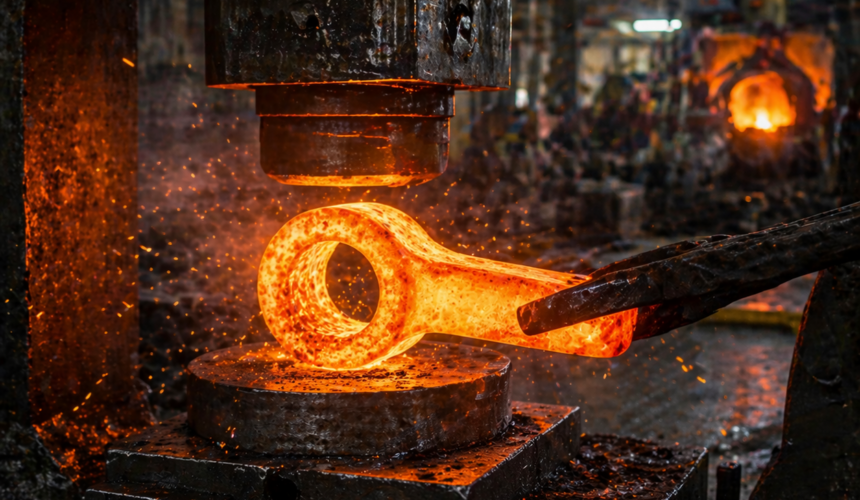
Forging remains one of the most effective methods for producing high-strength EV gear blanks because it improves material structure at a microscopic level.
What Is Closed Die Forging?
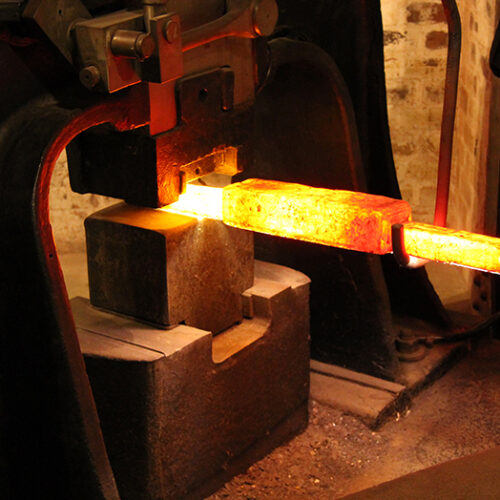
Closed die forging involves heating steel billets and shaping them between precision-engineered dies under extremely high pressure.
This process creates near-net-shape components with optimized grain flow.
Benefits include:
- Superior mechanical strength
- Enhanced fatigue resistance
- Improved impact toughness
- Better material utilization
- Reduced internal defects
Many leading gear manufacturing company operations utilize advanced closed-die forging systems to produce critical EV drivetrain components.
Why Forging Is Preferred Over Casting
Although casting can be used for some automotive applications, forging provides significant advantages for EV gears.
| Forging | Casting |
|---|---|
| Superior grain structure | Random grain structure |
| Higher fatigue resistance | Lower fatigue life |
| Minimal porosity | Potential internal voids |
| Greater strength | Lower mechanical properties |
| Better impact resistance | Higher brittleness risk |
This is one reason why forged components dominate modern EV transmission systems.
Step 3: CNC Machining of Gear Blanks
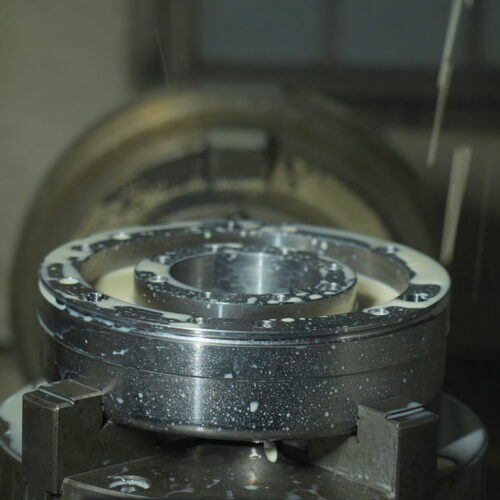
After forging, gear blanks undergo precision machining operations to establish critical dimensions and prepare the component for gear cutting.
CNC machining ensures exceptional accuracy and repeatability.
Operations may include:
- CNC Turning
- Facing
- Boring
- Drilling
- Milling
- Broaching
Modern manufacturers utilize advanced 5 Axis Machining Services to produce highly complex EV transmission components with exceptional dimensional control.
Step 4: Gear Hobbing – Creating Precision Tooth Profiles
Gear hobbing is one of the most important stages of the manufacturing process.
During this operation, specialized cutting tools generate precise gear tooth geometry required for efficient power transmission.
Gear hobbing enables production of:
- Spur Gears
- Helical Gears
- Planet Gears
- Sun Gears
- Pinion Gears
- Transmission Gears
Accurate tooth profiles ensure:
- Smooth operation
- Reduced friction
- Lower noise levels
- Improved efficiency
- Longer gear life
Companies specializing in planetary gear components rely heavily on precision gear hobbing technologies.
Step 5: Heat Treatment for Strength and Durability
Heat treatment transforms machined gear blanks into high-performance drivetrain components capable of surviving demanding EV operating conditions.
Common heat treatment processes include:
- Carburizing
- Induction Hardening
- Quenching
- Tempering
- Stress Relieving
Benefits include:
- Increased surface hardness
- Improved wear resistance
- Enhanced fatigue strength
- Longer service life
- Better load-carrying capability
Heat treatment is especially critical for EV transmission gears that operate under constant torque loads.
Step 6: Gear Grinding – Achieving Ultimate Precision
Gear grinding is the final machining process that transforms a functional gear into a precision-engineered drivetrain component.
During grinding, microscopic amounts of material are removed to achieve exceptional gear accuracy and surface finish.
Why Gear Grinding Matters
- Improves tooth profile accuracy
- Reduces operational noise
- Enhances efficiency
- Improves gear meshing
- Increases durability
- Minimizes vibration
Modern EV drivetrains often require DIN 5 or higher gear accuracy standards.
This level of precision is achieved through advanced grinding technologies used by specialized ground gears manufacturer facilities.
Step 7: Inspection and Quality Validation
Before gears are approved for production use, they undergo extensive inspection and validation procedures.
Quality control is essential because even minor deviations can impact performance.
Typical Inspection Methods
- Gear Profile Inspection
- Lead Measurement
- Pitch Accuracy Testing
- Runout Inspection
- Hardness Testing
- Metallurgical Analysis
- Coordinate Measuring Machine (CMM) Inspection
Manufacturers serving the automotive industry and general engineering sector often implement strict OEM quality protocols to ensure consistency and reliability.
The Role of Planetary Gears in EV Manufacturing
Many modern electric vehicles utilize planetary gear systems because they offer compact packaging and excellent torque distribution.
A planetary system typically includes:
- Sun Gear
- Planet Gears
- Ring Gear
- Planet Carrier
Manufacturing these components requires extremely high precision because even minor inaccuracies can affect system performance.
Specialized precision planetary gears are therefore manufactured using advanced forging, machining, heat treatment, and grinding processes.
Future Trends in EV Gear Manufacturing
As electric vehicles continue evolving, manufacturers are investing in new technologies to improve gear performance and production efficiency.
Emerging trends include:
- AI-driven quality control
- Smart manufacturing systems
- Advanced forging technologies
- Lightweight materials
- Integrated e-axle systems
- Ultra-precision grinding
- Industry 4.0 automation
Companies involved in industrial machinery manufacturing and forged machined components production are helping drive these innovations.
Conclusion
The EV gear manufacturing process combines advanced metallurgy, forging technology, precision machining, heat treatment, grinding, and quality control into a highly specialized production workflow.
Every stage contributes to the final performance of the gear. From selecting the right alloy steel to achieving micron-level grinding accuracy, manufacturers must maintain exceptional quality standards throughout the process.
As electric vehicles continue to transform transportation worldwide, the demand for high-performance gears will only increase. Manufacturers capable of delivering precision-engineered, forged, and ground gears will remain essential partners for global automotive OEMs and electric mobility innovators.
See How MTF Manufactures High-Performance EV Gears
Looking for a trusted partner for forged gears, planetary gears, EV transmission components, and precision drivetrain solutions?
Discover MTF’s expertise in the complete EV gear manufacturing process, advanced gear manufacturing company capabilities, world-class precision EV gears, and industry-leading solutions from a trusted ground gears manufacturer serving global OEMs and electric vehicle manufacturers.