


The Future of EV Drivetrain Components: Trends Shaping Electric Mobility
The global automotive industry is undergoing its biggest transformation in more than a century. Electric vehicles are no longer considered an emerging technology—they are rapidly becoming the future of transportation. Governments, automakers, and consumers across North America, Germany, and global markets are accelerating the adoption of electric mobility to reduce emissions, improve efficiency, and create sustainable transportation solutions.
At the center of this transformation lies a critical group of technologies often overlooked by consumers but essential to vehicle performance: EV drivetrain components.
From precision gears and motor shafts to integrated e-axles and transmission systems, drivetrain components determine how efficiently power is transferred from the electric motor to the wheels. As EV technology continues to evolve, manufacturers are developing smarter, lighter, stronger, and more efficient drivetrain solutions that will define the next generation of electric mobility.
In this article, we explore the major trends shaping the future of EV drivetrain technology and how advanced manufacturing is enabling the next wave of innovation.
The Global Growth of the EV Market
The electric vehicle market is expanding at an unprecedented pace. Automakers worldwide are investing billions of dollars into electrification programs, battery technologies, and next-generation vehicle platforms.
Several factors are driving this growth:
- Government emission regulations
- Increasing fuel costs
- Consumer demand for sustainable transportation
- Advancements in battery technology
- Expansion of charging infrastructure
- Lower total cost of ownership
As EV adoption increases, the demand for reliable and high-performance EV drivetrain components continues to grow across global markets.
OEMs are increasingly seeking manufacturing partners capable of delivering precision-engineered gears, shafts, transmission assemblies, and powertrain components that meet stringent performance requirements.
Why Drivetrain Components Are Critical to EV Performance
While batteries and electric motors receive much of the attention in electric vehicle development, the drivetrain plays an equally important role in overall vehicle performance.
The drivetrain is responsible for transferring power generated by the electric motor to the wheels efficiently and reliably.
Key drivetrain components include:
- Reduction Gears
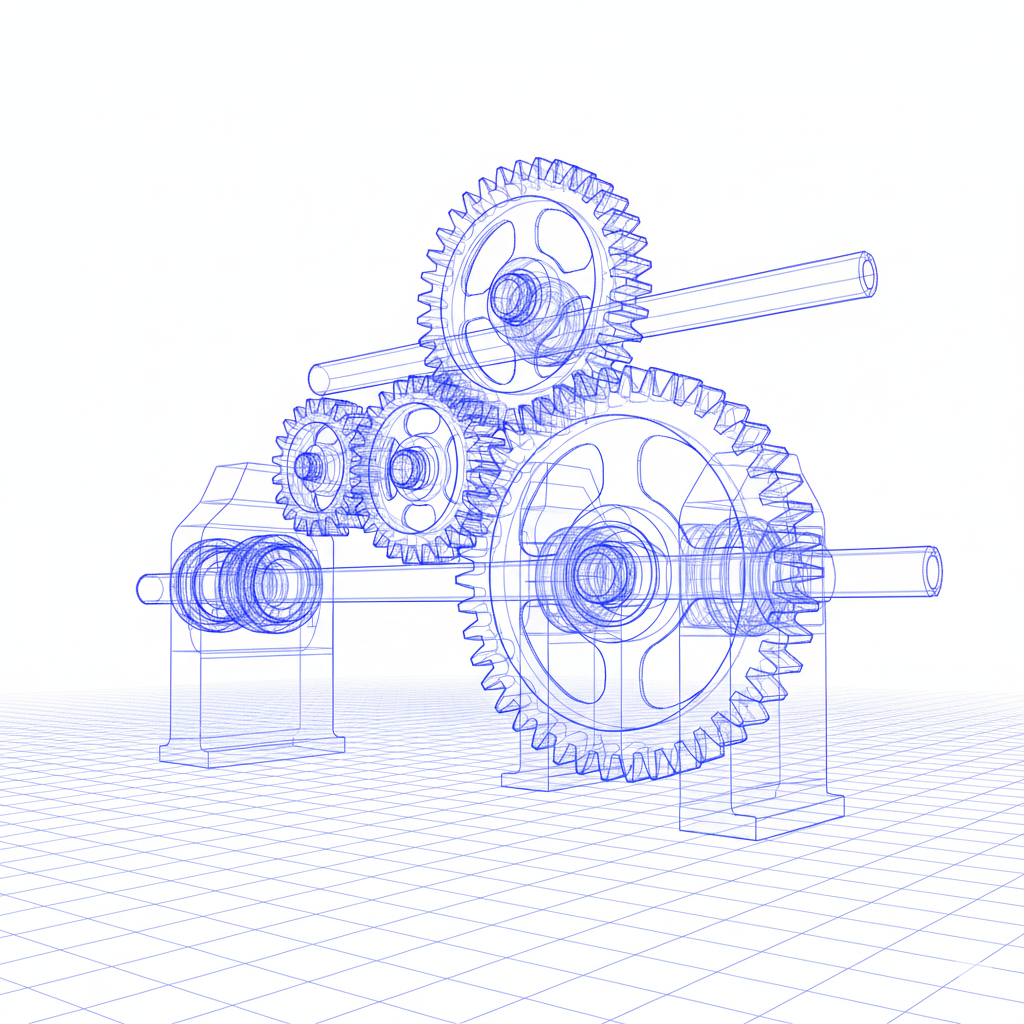
- Planetary Gears
- Motor Shafts
- Output Shafts
- Differentials
- Transmission Components
- E-Axle Assemblies
- Gear Carriers
- Couplings
Every component must function with exceptional precision to maximize efficiency, reduce energy losses, and improve vehicle range.
This is why leading manufacturers rely on experienced EV gear manufacturer partners to develop drivetrain systems capable of supporting future mobility solutions.
Trend #1: Lightweight Drivetrain Components
One of the biggest challenges facing electric vehicle manufacturers is vehicle weight.
Battery systems add significant mass to EV platforms. To compensate, automakers are actively seeking opportunities to reduce weight throughout the drivetrain.
Lightweight drivetrain components offer several advantages:
- Improved energy efficiency
- Extended driving range
- Better vehicle handling
- Reduced energy consumption
- Lower operating costs
Manufacturers are increasingly using optimized forged designs, advanced alloy steels, and precision engineering techniques to reduce weight without compromising strength.
Modern forged and machined components provide an ideal balance of lightweight construction and superior mechanical performance.
Trend #2: The Growing Importance of Precision Gears
As electric motors become more powerful and efficient, the quality of drivetrain gears becomes increasingly important.
Unlike traditional vehicles, EVs operate with minimal engine noise. This means drivetrain components must perform with exceptional smoothness and precision.
Precision gears help achieve:
- Higher efficiency
- Reduced noise and vibration
- Improved torque transfer
- Longer service life
- Enhanced vehicle comfort
Advanced gear technologies such as ground gears, planetary gears, and precision-forged transmission gears are becoming standard in modern EV powertrains.
Manufacturers specializing in precision forged gears are playing a critical role in supporting next-generation electric vehicle development.
Trend #3: Integrated E-Axle Systems
One of the most significant innovations shaping the future of electric mobility is the rise of integrated e-axle systems.
An e-axle combines multiple drivetrain functions into a single compact unit, including:
- Electric Motor
- Power Electronics
- Gearbox
- Differential
- Drive Axle Components
Benefits of integrated e-axles include:
- Reduced system weight
- Higher efficiency
- Simplified vehicle architecture
- Lower manufacturing costs
- Improved packaging flexibility
These systems depend heavily on high-quality electric vehicle transmission components capable of handling high torque loads while maintaining exceptional efficiency.
Trend #4: Planetary Gear Systems in EV Drivetrains
Planetary gear systems are becoming increasingly common in electric vehicle applications because of their compact design and superior torque-handling capabilities.
A planetary gear assembly typically consists of:
- Sun Gear
- Planet Gears
- Ring Gear
- Planet Carrier
These systems offer several advantages:
- High power density
- Compact packaging
- Improved load distribution
- Higher efficiency
- Reduced drivetrain noise
Leading manufacturers of planetary gear components continue to innovate to meet the increasing performance demands of modern electric vehicles.
Trend #5: Advanced EV Shaft Technologies
As drivetrain systems become more sophisticated, shaft technology is evolving rapidly.
Modern EV shafts must withstand:
- High rotational speeds
- Instant torque loads
- Continuous operating cycles
- Compact packaging constraints
Manufacturers are developing advanced forged and machined shafts with improved strength-to-weight ratios and superior fatigue performance.
Companies specializing as an EV shaft manufacturer play a critical role in supporting future drivetrain architectures.
Trend #6: Sustainability in EV Component Manufacturing
Sustainability is becoming a major factor in drivetrain component development.
Automakers are increasingly evaluating the environmental impact of manufacturing processes, material sourcing, and supply chains.
Modern manufacturers are investing in:
- Renewable energy systems
- Efficient forging technologies
- Waste reduction programs
- Material recycling initiatives
- Low-carbon manufacturing processes
Sustainable manufacturing not only reduces environmental impact but also improves operational efficiency and long-term competitiveness.
Forward-thinking manufacturing companies are integrating sustainability into every stage of production.
Trend #7: Advanced Manufacturing Technologies
The future of EV drivetrain production will be heavily influenced by advanced manufacturing technologies.
Industry 4.0 innovations are transforming production facilities worldwide.
Key technologies include:
- Smart Manufacturing Systems
- Industrial IoT Monitoring
- Artificial Intelligence
- Digital Quality Control
- Predictive Maintenance
- Automated Inspection Systems
These technologies improve quality, reduce waste, and enable greater manufacturing precision.
Companies investing in advanced machining technologies are gaining significant competitive advantages in the EV supply chain.
Trend #8: Higher Torque Electric Powertrains
Future electric motors are expected to deliver even greater torque and power density.
This creates new challenges for drivetrain engineers.
Future components must provide:
- Higher fatigue resistance
- Enhanced durability
- Improved heat management
- Superior gear accuracy
- Longer service life
Advanced forging technologies are becoming increasingly important because they improve grain flow and mechanical properties in critical drivetrain components.
This is why manufacturers continue to invest in forged gear manufacturing capabilities.
How Germany and North America Are Driving Innovation
Germany and North America remain among the world’s leading centers for electric vehicle innovation.
German engineering is widely recognized for its focus on precision, quality, and manufacturing excellence, while North American automakers are investing heavily in EV production capacity.
This has created growing demand for suppliers capable of producing:
- High-Precision Gears
- Transmission Components
- Forged Powertrain Parts
- Planetary Gear Assemblies
- EV Shafts
- Drivetrain Components
Companies serving the automotive industry and general engineering sector are increasingly aligning their manufacturing capabilities with these global market requirements.
The Future of EV Drivetrain Components
The future of electric mobility will depend heavily on continued innovation in drivetrain technology.
Future EV platforms will require:
- Lighter Components
- Smarter Systems
- Higher Efficiency
- Advanced Materials
- Precision Manufacturing
- Sustainable Production
Manufacturers capable of combining forging expertise, precision machining, advanced gear production, and rigorous quality control will be well-positioned to support the next generation of electric vehicles.
Conclusion
The evolution of electric vehicles is creating new opportunities and challenges for drivetrain component manufacturers. As EV adoption accelerates globally, demand for high-performance gears, shafts, planetary gear systems, and transmission components will continue to grow.
Lightweight construction, integrated e-axles, advanced manufacturing technologies, sustainability initiatives, and precision engineering are all shaping the future of electric mobility.
The companies that invest in innovation today will become the preferred partners for tomorrow’s electric vehicle manufacturers.
Partner with MTF for Next-Generation EV Drivetrain Solutions
Looking for a trusted supplier of advanced drivetrain technologies?
Partner with MTF for high-performance EV drivetrain components, precision-engineered solutions from an experienced EV gear manufacturer, advanced electric vehicle transmission components, and innovative capabilities from a leading EV shaft manufacturer serving global OEMs and electric mobility pioneers.