


Why Automotive OEMs Prefer Forged Gears for Modern Transmission Systems
As modern vehicles become more powerful, efficient, and technologically advanced, the demand for high-performance transmission components continues to increase. Automotive manufacturers face constant pressure to improve fuel economy, reduce emissions, increase durability, and enhance vehicle performance while maintaining strict quality standards.
At the center of every transmission system are gears that transfer power from the engine or electric motor to the drivetrain. These gears operate under extreme loads, high rotational speeds, and continuous stress cycles throughout the life of the vehicle.
To meet these demanding requirements, global OEMs increasingly choose forged gears over alternative manufacturing methods. Forging provides superior strength, fatigue resistance, durability, and reliability, making it the preferred solution for modern automotive transmissions.
In this article, we explore why forged gears have become the industry standard and how they contribute to vehicle performance, safety, and long-term reliability.
The Growing Demands on Modern Automotive Transmissions
Today’s vehicles are expected to deliver exceptional performance while operating more efficiently than ever before.
Several trends are increasing the demands placed on transmission systems:
- Higher Engine Output
- Turbocharged Powertrains
- Hybrid Technologies
- Electric Vehicle Drivetrains
- Multi-Speed Transmissions
- Reduced Vehicle Weight
- Longer Warranty Periods
These factors require gears capable of handling greater loads while maintaining dimensional stability and operational efficiency.
This is why leading manufacturers partner with experienced automotive gear manufacturer companies capable of producing precision-engineered transmission components.
What Are Forged Gears?
Forged gears are produced by shaping heated steel billets under extremely high pressure using specially designed forging dies. Unlike cast gears, forged components benefit from a continuous grain flow structure that follows the shape of the gear.
This unique manufacturing process creates a component with superior mechanical properties and improved structural integrity.
Forging is widely used for manufacturing:
- Transmission Gears
- Pinion Gears
- Ring Gears
- Planet Gears
- Sun Gears
- Differential Components
- Drive Shafts
- Powertrain Assemblies
Many of these products are manufactured by specialized forging gears manufacturer facilities serving global automotive OEMs.
Why Forging Outperforms Casting
One of the most common questions in automotive manufacturing is why forging remains the preferred choice over casting.
The answer lies in material structure.
During forging, metal grains are compressed and aligned according to the geometry of the component. This improves strength and toughness while reducing internal defects.
| Forged Gears | Cast Gears |
|---|---|
| Superior Grain Flow | Random Grain Structure |
| Higher Strength | Lower Mechanical Strength |
| Excellent Fatigue Life | Reduced Fatigue Resistance |
| Improved Durability | Higher Risk of Cracking |
| OEM Preferred | Limited Critical Applications |
For critical transmission systems, forged components consistently outperform cast alternatives.
Superior Fatigue Resistance
Automotive gears experience millions of loading cycles throughout their service life.
Every acceleration, gear shift, and torque transfer event creates stress within the gear teeth.
Over time, repeated stress can lead to fatigue failures if the material is unable to withstand cyclical loading.
Forged gears provide significantly better fatigue resistance because:
- Internal porosity is minimized
- Grain flow is optimized
- Material density is increased
- Structural integrity is enhanced
This is particularly important in modern EV gear manufacturing applications where drivetrain components experience instant torque delivery.
The Importance of Grain Flow in Gear Performance
Grain flow is one of the biggest advantages of forging technology.
When steel is forged, its internal grain structure follows the shape of the component. This creates a stronger and more durable part compared to materials with random grain orientation.
Benefits include:
- Higher Load Capacity
- Improved Impact Resistance
- Better Fatigue Performance
- Enhanced Durability
- Longer Service Life
For automotive transmissions that operate under continuous load, grain flow optimization provides a significant performance advantage.
How Forged Gears Improve Transmission Efficiency
Efficiency is a major priority for automotive manufacturers.
Precision-forged gears contribute to drivetrain efficiency through:
- Improved Gear Geometry
- Reduced Friction Losses
- Higher Surface Integrity
- Better Gear Meshing
- Lower Energy Consumption
Modern planetary gear components are often forged to achieve the accuracy and durability required in advanced transmission systems.
Why Electric Vehicles Depend on Forged Gears
The shift toward electric mobility has further increased demand for forged transmission components.
Unlike conventional engines, electric motors generate maximum torque instantly. This places greater stress on gears, shafts, and drivetrain assemblies.
Forged components help manage these loads while maintaining long-term reliability.
Key EV drivetrain components include:
- Reduction Gears
- Planetary Gears
- Motor Shafts
- Output Shafts
- Differential Assemblies
Manufacturers specializing in electric vehicle gear manufacturing increasingly utilize forged components to meet OEM performance requirements.
Precision Machining After Forging
Forging creates the foundation for a high-quality gear, but precision machining is equally important.
After forging, gears typically undergo:
- CNC Turning
- Gear Hobbing
- Gear Shaping
- Broaching
- Heat Treatment
- Gear Grinding
Modern manufacturers use advanced 5 Axis Machining Services to achieve exceptional dimensional accuracy and repeatability.
OEM Quality Requirements for Automotive Gears
Automotive OEMs maintain some of the strictest quality standards in manufacturing.
Every gear must meet specifications for:
- Gear Profile Accuracy
- Hardness Consistency
- Material Traceability
- Surface Finish
- Fatigue Performance
- Noise Reduction
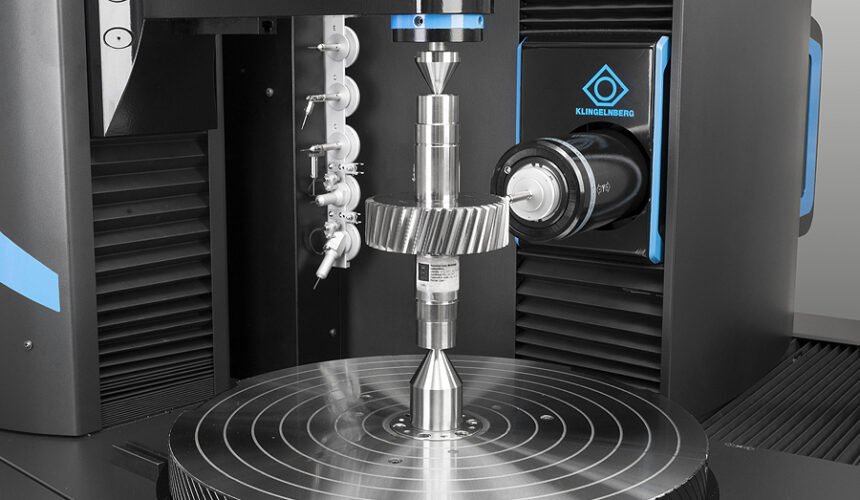
Manufacturers serving the automotive industry invest heavily in inspection systems and quality control processes to meet these requirements.
The Future of Forged Automotive Gears
Future vehicle platforms will require even higher levels of performance.
Emerging trends include:
- Lightweight Transmission Components
- Integrated E-Axles
- High-Speed EV Gearboxes
- Advanced Planetary Systems
- Smart Manufacturing Technologies
- AI-Based Quality Inspection
Forging technology will continue evolving to support these innovations and provide the strength required for next-generation mobility solutions.
Companies involved in precision engineering manufacturing and industrial machinery production are already investing in advanced production technologies to support future automotive requirements.
Conclusion
Forged gears remain the preferred choice for modern automotive transmissions because they offer superior strength, fatigue resistance, grain flow optimization, and long-term reliability.
As vehicle technologies continue evolving, OEMs will increasingly depend on forged transmission components capable of handling higher torque loads, greater efficiency requirements, and longer service life expectations.
Manufacturers that combine forging expertise with precision machining and strict quality control will continue playing a critical role in the future of automotive mobility.
Explore Our Automotive Gear Manufacturing Expertise
Looking for a trusted automotive gear supplier for transmission gears, differential components, planetary gears, EV drivetrain parts, and precision-forged automotive components?
Discover MTF’s capabilities as a leading automotive gear manufacturer, trusted forging gears manufacturer, producer of planetary gear components, and partner for advanced electric vehicle gear manufacturing solutions.