
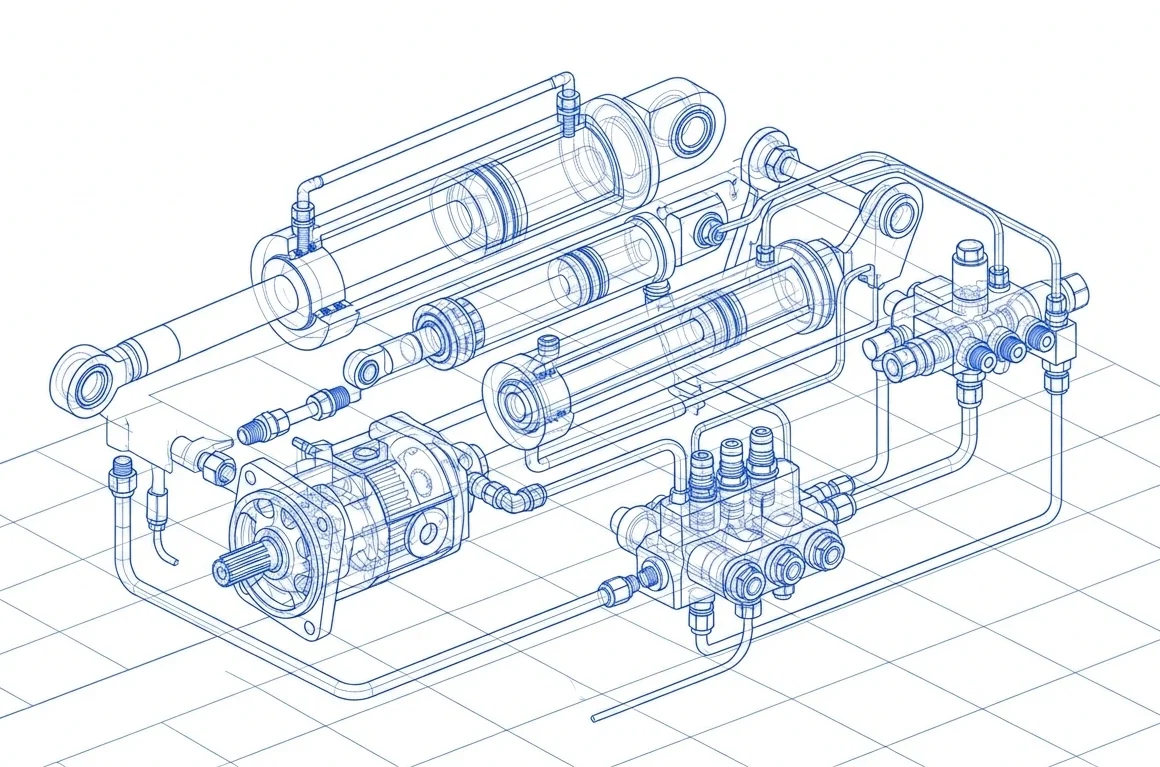



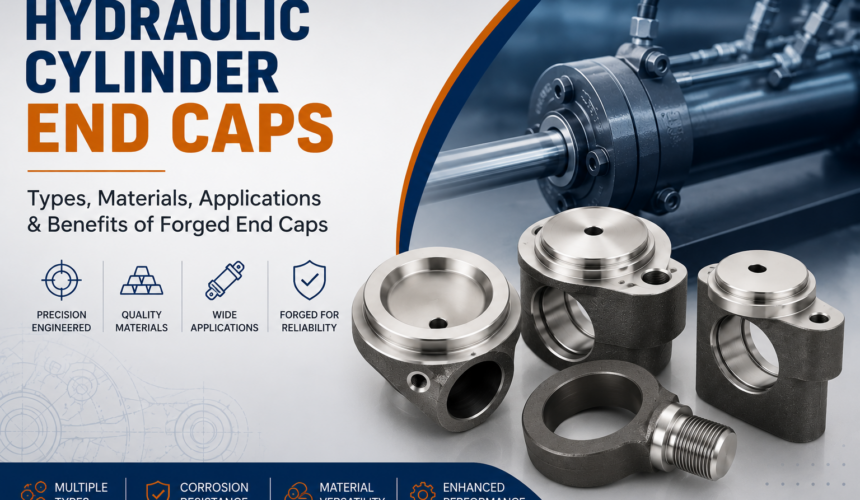
Hydraulic cylinders are essential components in equipment that performs lifting, pushing, pulling, tilting, and positioning operations. From excavators and loaders to forklifts and agricultural machinery, hydraulic cylinders convert fluid pressure into controlled linear motion. While the piston, rod, barrel, and seals receive much of the attention, the hydraulic cylinder end cap is equally important for maintaining the structural integrity and sealing performance of the cylinder.
A properly engineered hydraulic cylinder end cap closes the cylinder assembly, supports the internal pressure, accommodates sealing arrangements, and provides the required connection between the cylinder barrel and other components. Depending on the cylinder design and application, end caps can be welded, threaded, bolted/flanged, or secured with tie rods.
For demanding applications, forged hydraulic cylinder end caps offer an attractive combination of strength, durability, dimensional consistency, and resistance to mechanical loading.
What Is a Hydraulic Cylinder End Cap?
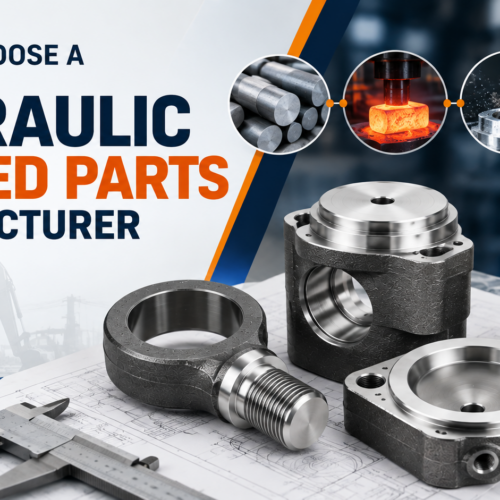
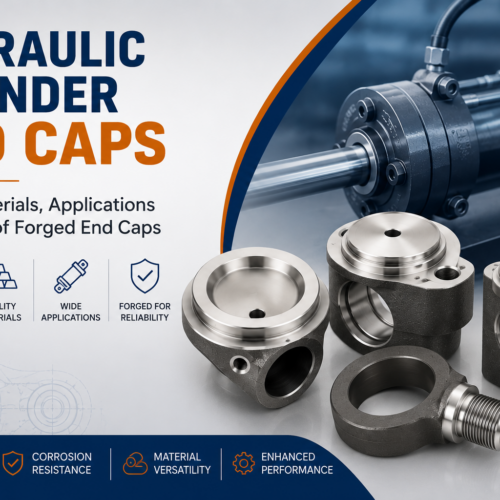
A hydraulic cylinder end cap is a forged and machined metal component positioned at one or both ends of a hydraulic cylinder. It helps close the pressure chamber and forms part of the structural assembly that contains hydraulic fluid.
The end cap may incorporate features such as mounting provisions, sealing grooves, ports, rod passages, threaded sections, or flange interfaces depending on the cylinder configuration.
During operation, the component can experience internal hydraulic pressure, repeated load cycles, vibration, impact, and temperature variations. This makes material selection, geometry, machining accuracy, and connection design important factors in overall cylinder reliability.
Hydraulic cylinders themselves are available in several configurations, including single-acting, double-acting, tandem, and telescopic designs. Their construction also varies between tie-rod, welded, and mill-duty arrangements, with the method of attaching the end caps being one of the important design differences.
Why Are Hydraulic Cylinder End Caps Important?
The end cap performs several functions within a hydraulic cylinder assembly:
- Pressure containment: It helps contain hydraulic fluid and withstand internal pressure.
- Sealing support: Machined grooves and interfaces accommodate seals and help prevent fluid leakage.
- Structural support: The end cap transfers loads between the cylinder barrel and connected components.
- Component alignment: Accurate machining helps maintain proper alignment of internal cylinder components.
- Mounting: Depending on the design, the cap can provide mounting points or interfaces for connecting the cylinder to machinery.
- Serviceability: Certain end-cap designs can be removed more easily for inspection, seal replacement, and maintenance.
A failure in the end-cap assembly can contribute to leakage, deformation, loss of pressure, or premature cylinder downtime. Factors such as excessive pressure, fatigue, corrosion, incorrect assembly, and seal deterioration can all influence end-cap performance.
Types of Hydraulic Cylinder End Caps
There is no single end-cap configuration suitable for every hydraulic cylinder. The correct design depends on pressure, cylinder size, operating environment, maintenance requirements, available installation space, and the type of equipment.
1. Welded Hydraulic Cylinder End Caps
In a welded cylinder design, the end-cap assembly is permanently joined to the cylinder structure through welding or associated welded flange arrangements.
Welded end caps are commonly used where compact dimensions, structural rigidity, and resistance to demanding mobile-equipment environments are important. They are particularly relevant to heavy machinery such as excavators, loaders, and other off-highway equipment.
The main limitation is serviceability. Since the assembly is permanently connected, internal repairs can be more involved compared with removable end-cap designs.
2. Threaded End Caps
A threaded hydraulic cylinder end cap is secured by a threaded connection between the end cap and the cylinder barrel.
This design can provide a relatively compact construction and may be suitable for selected small- and medium-sized cylinders. However, thread geometry, engagement length, material strength, sealing, and assembly accuracy must be carefully considered.
Threaded configurations can provide a practical balance between compactness, manufacturing requirements, and maintenance depending on the cylinder design.
3. Bolted or Flanged End Caps
Bolted hydraulic cylinder end caps use a flange and fasteners to connect the end cap to the cylinder barrel.
This configuration provides a detachable connection, which can be advantageous when inspection and maintenance are important. Flanged designs are particularly useful for larger cylinders and demanding hydraulic systems where the connection requires substantial load-bearing capacity.
Correct bolt selection, alignment, tightening sequence, and preload are important for maintaining reliable sealing and structural performance.
4. Tie-Rod End Caps
A tie-rod hydraulic cylinder end cap is secured using high-strength rods and nuts extending through the cylinder assembly.
Tie-rod cylinders are widely used in industrial and mobile hydraulic applications. Their removable construction can simplify access for maintenance and replacement of internal components.
However, tie-rod configurations require careful consideration of preload, vibration, fatigue, and installation space, particularly when cylinders operate under repeated impact or pressure cycling.
Forged Hydraulic Cylinder End Caps: Why Forging Matters
For applications exposed to repeated loads and demanding operating conditions, forged hydraulic cylinder end caps can provide important manufacturing advantages.
Forging shapes heated metal under controlled force, producing a component with a refined and directional grain structure that can support strength and durability. Compared with manufacturing a component entirely from a cast form, forging can be particularly attractive where mechanical loading and structural reliability are key considerations.
For hydraulic applications, the advantages of forged end caps can include:
- High mechanical strength
- Improved resistance to repeated loading
- Reliable structural integrity
- Good dimensional consistency after machining
- Reduced risk associated with casting-related discontinuities
- Suitability for safety-critical and heavy-duty applications
- Ability to produce customized geometries for specific cylinder designs
Metalic Technoforge’s manufacturing capabilities include closed-die forging, controlled induction heating, powerful forging equipment, in-house heat treatment, and precision machining. These capabilities align well with the requirements of high-performance forged components and support the production of machined hydraulic cylinder end caps with precise critical features.
Materials Used for Hydraulic Cylinder End Caps
Material selection is one of the most important decisions when designing a hydraulic cylinder end cap. The selected material must match the pressure, loading, temperature, corrosion exposure, machining requirements, and service environment.
Carbon and Alloy Steel End Caps
Carbon steel and alloy steel are widely considered for demanding hydraulic applications because they can provide a strong combination of strength, toughness, machinability, and cost effectiveness.
Forged steel end caps are particularly suitable for heavy-duty hydraulic cylinders where repeated mechanical loading and impact resistance are important.
Stainless Steel End Caps
Stainless steel hydraulic cylinder end caps may be considered where corrosion resistance is a major requirement.
They can be useful in applications exposed to moisture, corrosive environments, or specific process conditions. However, stainless steel selection should be based on the actual operating environment, required mechanical properties, machinability, and total component cost.
Cast Iron End Caps
Cast iron end caps may be used in certain hydraulic cylinder designs where the material’s properties, casting capability, and application requirements make it appropriate.
Cast iron can provide good wear characteristics and machinability in suitable applications, but the material and manufacturing process must be selected according to the required mechanical loading, impact conditions, pressure, and design geometry.
For highly loaded mobile and off-highway applications, forged hydraulic cylinder end caps for off-highway equipment can be a preferred solution when strength and fatigue resistance are key design priorities.
Hydraulic Cylinder End Cap Applications
The demand for reliable hydraulic cylinder components continues across industries where machines must generate controlled linear force under demanding operating conditions.
Forklifts
Forklifts use hydraulic cylinders for functions such as lifting and tilting. Their cylinders experience repeated loading cycles throughout normal operation, making durable end-cap construction important.
Mining Equipment
Mining machinery operates in abrasive, high-load environments with vibration, shock, and demanding duty cycles. Forged hydraulic cylinder end caps for mining equipment can be used in cylinder assemblies designed for heavy-duty mining equipment.
Agricultural Equipment
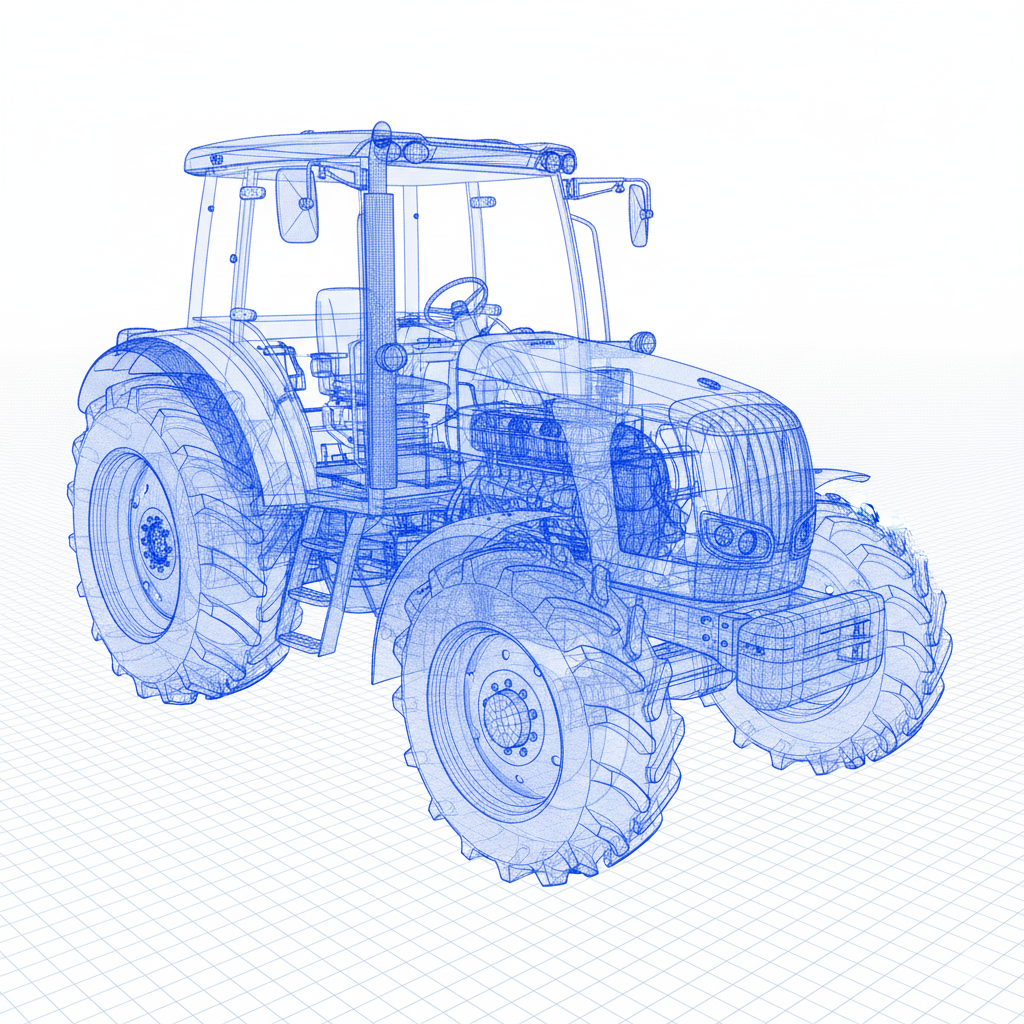
Tractors, harvesters, loaders, implements, and other agricultural machines depend on hydraulic systems for lifting, steering, positioning, and implement control. Components must withstand repeated operation and variable environmental conditions.
Construction Equipment
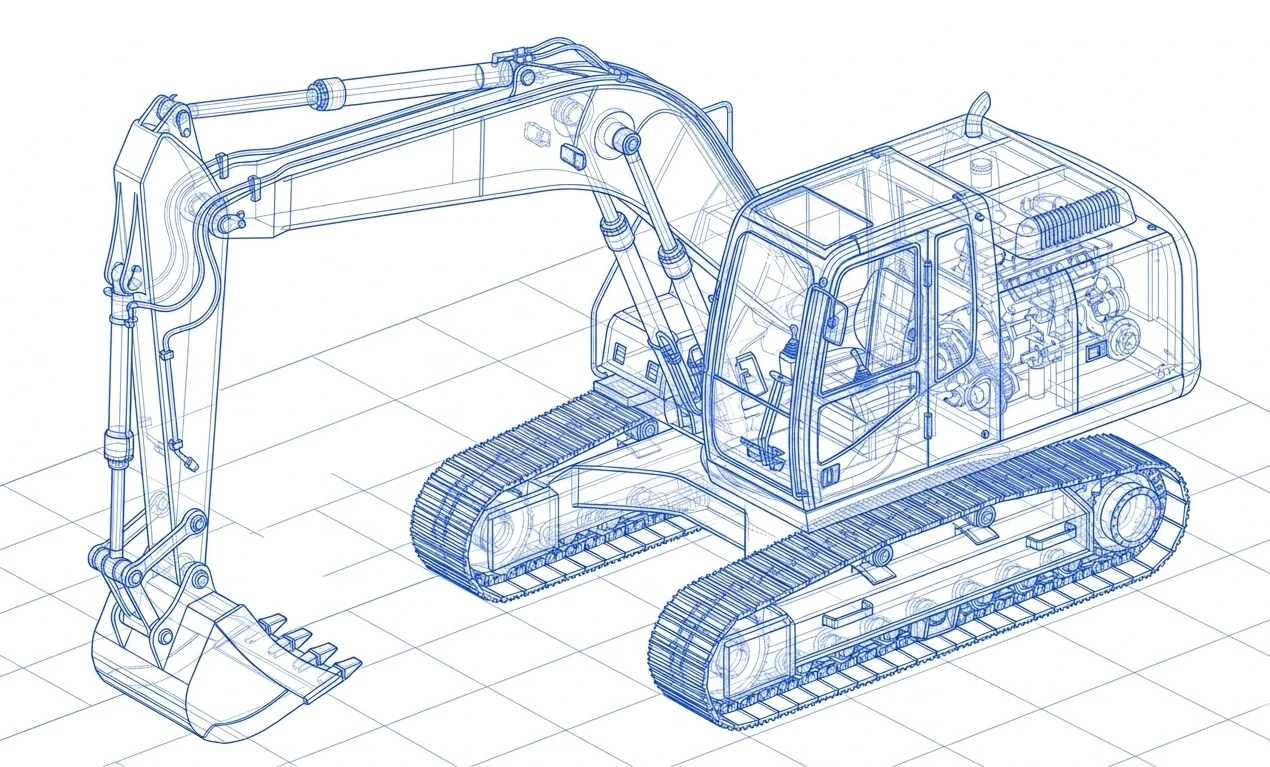
Construction machinery represents one of the major application areas for hydraulic cylinders. Excavators, loaders, earth movers, cranes, and related equipment rely on hydraulic cylinders for movement and load handling.
Hydraulic cylinder end caps for excavators must be designed to withstand repeated pressure cycles, mechanical loading, vibration, and shock. Similarly, hydraulic cylinder end caps for loaders and earth-moving equipment need to support demanding working conditions while maintaining reliable sealing and structural performance.
What Should You Consider When Selecting an End Cap?
Selecting the right hydraulic cylinder end cap involves more than choosing a material or shape. Engineers and procurement teams should evaluate:
- Working pressure – The end cap must be suitable for the cylinder’s operating and peak pressure conditions.
- Cylinder diameter – Larger cylinders can generate substantial forces on end-cap structures.
- Load and duty cycle – Frequent cycling, shock loads, and vibration can influence fatigue life.
- Connection method – Welded, threaded, flanged, and tie-rod designs have different installation and maintenance requirements.
- Material – Steel, alloy steel, stainless steel, or cast iron should be selected according to application requirements.
- Machining tolerances – Accurate sealing grooves, bores, threads, and mounting interfaces are essential.
- Corrosion environment – Surface protection or corrosion-resistant materials may be necessary.
- Maintenance requirements – Equipment requiring frequent service may benefit from a removable end-cap configuration.
Manufacturing of Forged Hydraulic Cylinder End Caps
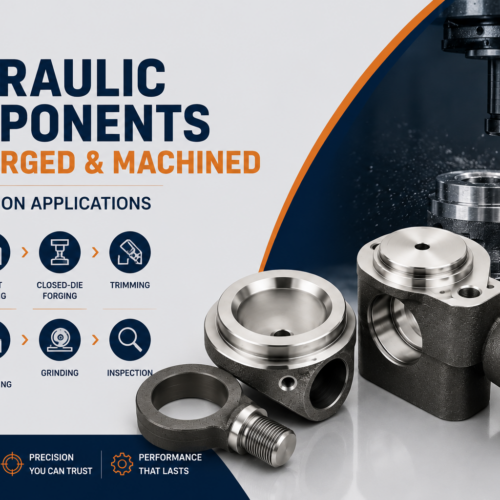
Producing a high-quality forged hydraulic cylinder end cap requires control across forging, heat treatment, machining, and inspection.
The process can begin with controlled raw-material preparation and heating, followed by forging to achieve the required component geometry. Subsequent heat treatment can be used to achieve specified mechanical properties.
Precision machining then creates critical features such as bores, threads, sealing grooves, mounting surfaces, and other interfaces. Dimensional inspection is essential because even relatively small deviations in critical features can affect assembly, sealing, and cylinder performance.
Metalic Technoforge combines forging with in-house machining and heat-treatment capabilities. Its machining operations include CNC turning, milling, boring, grinding, tapping, broaching, and other precision processes, supported by dimensional inspection systems.
Conclusion
A hydraulic cylinder end cap is a critical structural and sealing component that directly contributes to the reliability of hydraulic equipment. The appropriate design depends on cylinder configuration, pressure, loading, installation requirements, maintenance needs, and operating environment.
For demanding applications such as forklifts, mining equipment, agricultural machinery, excavators, loaders, and earth movers, forged hydraulic cylinder end caps can provide the strength and durability required for repeated heavy-duty operation.
With controlled forging, precision machining, heat treatment, and inspection, manufacturers can develop end caps engineered to meet specific cylinder and OEM requirements. For companies sourcing forged hydraulic cylinder components, selecting a manufacturing partner with integrated forging and machining capabilities can help maintain consistency from raw material through to the finished component.
Frequently Asked Questions
What is a hydraulic cylinder end cap?
A hydraulic cylinder end cap is a component that closes the end of a hydraulic cylinder and helps contain hydraulic fluid, support pressure, accommodate sealing elements, and connect the cylinder assembly to other components.
What are the main types of hydraulic cylinder end caps?
Common configurations include welded end caps, threaded end caps, bolted or flanged end caps, and tie-rod end caps. The appropriate type depends on cylinder design, pressure, maintenance requirements, and application conditions.
Why use forged hydraulic cylinder end caps?
Forged hydraulic cylinder end caps can provide high strength, structural integrity, durability under repeated loading, and good suitability for heavy-duty hydraulic applications.
Which materials are used for hydraulic cylinder end caps?
Common options include carbon steel, alloy steel, stainless steel, and cast iron. The correct material depends on pressure, mechanical loading, corrosion exposure, temperature, machining requirements, and application conditions.
Where are hydraulic cylinder end caps used?
They are used across construction, agriculture, mining, material handling, industrial hydraulics, and heavy equipment. Typical machinery includes forklifts, excavators, loaders, earth movers, and agricultural equipment.