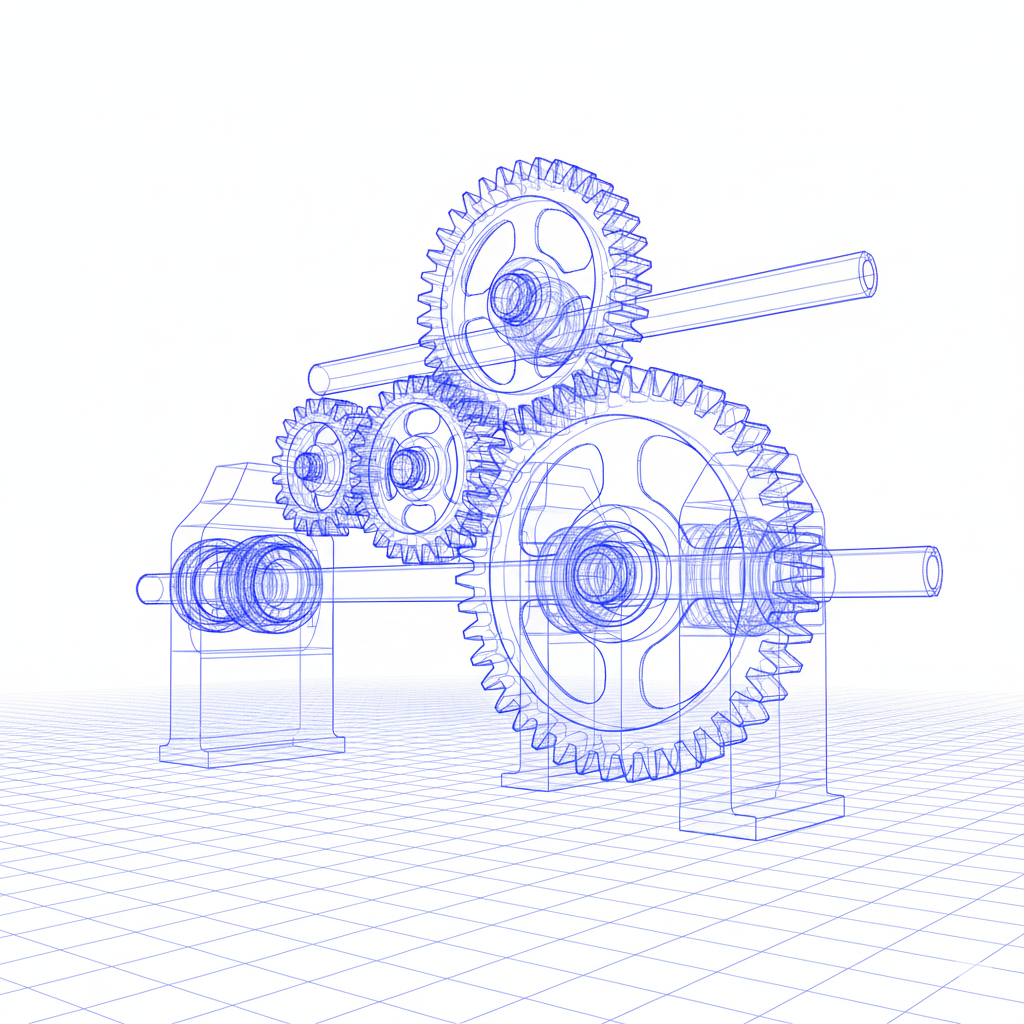
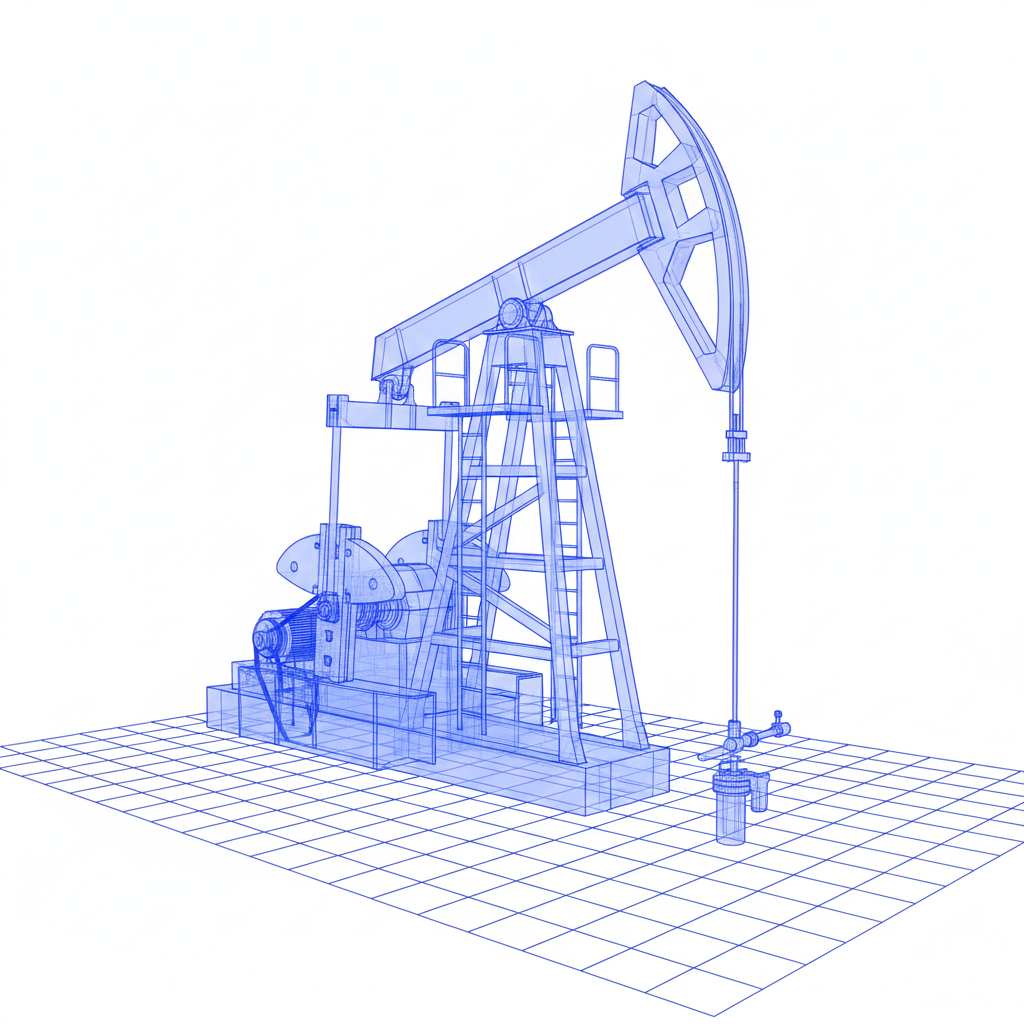
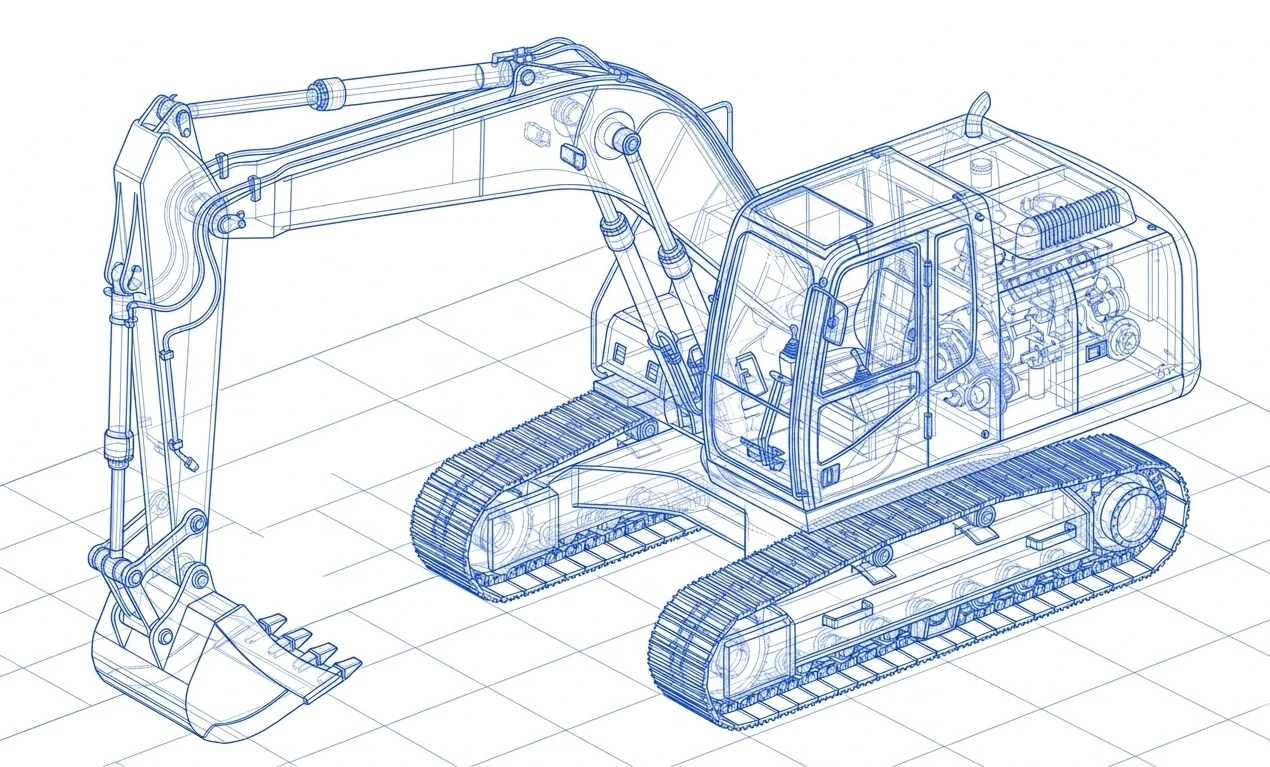
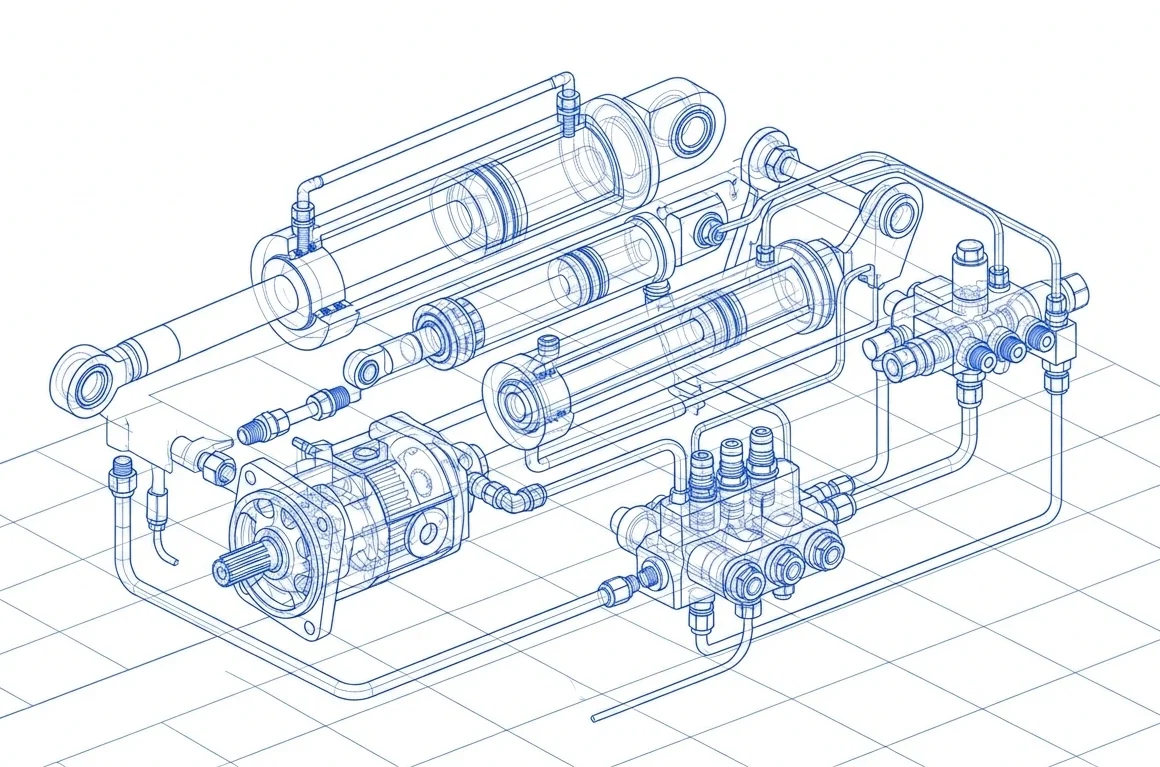


Hydraulic equipment is widely used in excavators, loaders, forklifts, agricultural machinery, mining equipment, earth movers, and industrial systems. These machines depend on hydraulic components to convert fluid power into controlled mechanical movement for lifting, pushing, pulling, positioning, and material handling.
Because hydraulic equipment operates through repeated movement and mechanical loading, its components must provide strength, fatigue resistance, dimensional accuracy, reliable sealing, and long-term durability. This is one of the key reasons manufacturers consider hydraulic forged parts for critical applications.
Forging provides a manufacturing route for producing strong metal components that can subsequently be heat treated, precision machined, and inspected according to application requirements. The combination of these processes helps manufacturers produce forged hydraulic components suitable for demanding equipment and machinery applications.
What Are Hydraulic Forged Parts?
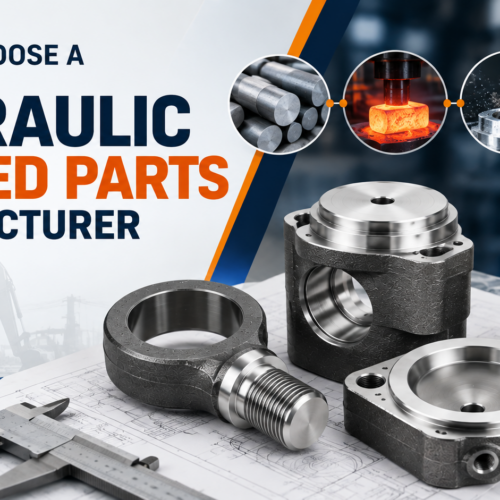
Hydraulic forged parts are components used in hydraulic equipment that are manufactured through a controlled forging process and then finished through operations such as heat treatment, CNC machining, drilling, grinding, tapping, or inspection.
During forging, metal is heated to a controlled temperature and shaped under mechanical force using suitable dies or tooling. The resulting forged component provides the basic geometry, which can then be machined to achieve the required dimensions and functional surfaces.
Depending on the design and application, forged hydraulic components can include:
- Hydraulic cylinder end caps
- Cylinder heads
- Rod ends
- Clevises
- Mounting components
- Hydraulic fittings
- Adapters
- Connection components
- Other load-bearing hydraulic parts
The manufacturing process is selected according to factors such as component geometry, material grade, load requirements, production volume, dimensional tolerances, and intended operating environment.
Why Are Forged Parts Used in Hydraulic Equipment?
The main reason manufacturers use forging for hydraulic components is the need for reliable and durable parts that can withstand repeated mechanical loading.
Hydraulic equipment does not generally perform a single movement once. Excavators, loaders, forklifts, and agricultural machines continuously extend, retract, lift, lower, tilt, and position components during operation.
As a result, hydraulic components can experience:
- Repeated load cycles
- Mechanical stress
- Vibration
- Shock loading
- Changing loads
- Temperature variations
- Friction and wear
- Environmental exposure
For this reason, the selection of the manufacturing process can have an important role in the expected performance of a hydraulic component.
1. High Mechanical Strength
One of the major reasons hydraulic forged parts are considered for demanding applications is their potential for high mechanical strength.
During forging, metal undergoes controlled forming. Depending on the forging method and component geometry, this can produce favorable grain flow and a dense material structure. MTF’s current forging process specifically describes controlled deformation and material flow through its closed-die forging process.
This can be beneficial for components containing:
- Load-bearing sections
- Mounting points
- Flanges
- Threads
- Bores
- Bosses
- Connection interfaces
These areas can experience significant mechanical forces during equipment operation.
However, component strength does not depend on forging alone. Material selection, forging temperature, die design, deformation, heat treatment, machining, and inspection all contribute to the final performance of the component.
A properly controlled manufacturing process is therefore essential for producing consistent forged hydraulic components.
2. Resistance to Repeated Load Cycles
Hydraulic machinery frequently operates through repetitive movements.
An excavator, for example, repeatedly uses hydraulic cylinders during digging, lifting, loading, and positioning. A forklift performs repeated lifting and lowering operations, while agricultural equipment may continuously adjust implements during field operations.
These repeated movements expose components to cyclic stresses.
Over time, repeated mechanical stress can contribute to fatigue, making fatigue resistance an important consideration when selecting materials and manufacturing processes.
Engineers and manufacturers may consider factors such as:
- Number of operating cycles
- Component geometry
- Stress concentration
- Material properties
- Surface condition
- Heat treatment
- Machining accuracy
- Shock loading
- Operating environment
For suitable designs, hydraulic forged parts can provide the mechanical characteristics required for components exposed to repeated loading.
3. Material Integrity and Structural Reliability
Hydraulic components can experience several forms of mechanical loading during equipment operation.
A cylinder component, for example, may experience a combination of load, vibration, impact, and repeated movement. Critical components therefore require appropriate material selection and manufacturing control.
Forging can produce a dense and mechanically robust component structure when the process is correctly designed and controlled.
The objective is not simply to create the required shape. The component must also provide the structural characteristics necessary for its intended application.
This is particularly important for forged hydraulic components used in construction machinery, mining equipment, agricultural equipment, and material-handling systems.
4. Reliable Sealing Surfaces
Hydraulic systems rely on effective sealing to retain fluid and maintain consistent system operation.
Many hydraulic components include precision-machined features such as:
- O-ring grooves
- Seal grooves
- Bores
- Threads
- Mating surfaces
- Ports
- Flanges
The forged component provides the basic structural form, while precision machining creates the surfaces and dimensions required for proper assembly and sealing.
For example, a forged hydraulic cylinder end cap may require accurately machined sealing grooves, threads, bores, and mounting surfaces. MTF’s hydraulic capabilities specifically include precision turning and milling for sealing surfaces, grinding, and CNC machining.
The relationship between forging and machining is therefore important. A properly forged hydraulic component still requires accurate finishing to become a functional hydraulic component.
5. Dimensional Accuracy and Repeatability
Hydraulic components are often assembled with multiple mating parts. This makes dimensional accuracy important for proper fit, alignment, sealing, and overall component performance.
Critical dimensions may include:
- Bore diameter
- Thread dimensions
- Groove dimensions
- Concentricity
- Flatness
- Mounting-hole locations
- Surface finish
- Overall dimensions
Inaccurate dimensions can create assembly difficulties, alignment problems, sealing issues, and premature wear.
This is why hydraulic forged parts manufacturers in India serving OEMs need capabilities that extend beyond forging.
A typical manufacturing route can include:
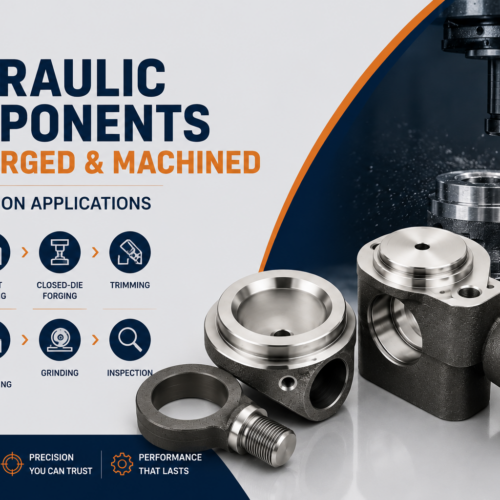
Material Preparation → Forging → Heat Treatment → CNC Machining → Finishing → Inspection
Each stage contributes to the consistency and functionality of the finished hydraulic component. MTF’s published manufacturing process covers raw-material selection, induction heating, closed-die forging, trimming, heat treatment, surface finishing and final inspection.
Forging vs. Casting for Hydraulic Components
Both forging and casting are established manufacturing methods, and each can be suitable for different hydraulic component requirements.
Forging is generally considered for components where mechanical strength, fatigue performance, impact resistance, and structural reliability are important.
Casting can be advantageous for components requiring highly complex geometries, large sections, internal passages, or shapes that may be difficult to produce economically through forging.
Therefore, the best manufacturing process depends on the individual component.
Important considerations include:
- Component geometry
- Material
- Mechanical loading
- Operating environment
- Dimensional requirements
- Production volume
- Machining requirements
- Expected service life
For suitably designed load-bearing hydraulic components, forging can provide an effective manufacturing solution.
What Hydraulic Components Can Be Forged?
A range of components used in hydraulic systems can potentially be manufactured through forging, depending on their design, size, material, and production requirements.
Hydraulic Cylinder Components
Hydraulic cylinders contain several components that experience repeated mechanical loading.
These can include:
- End caps
- Cylinder heads
- Rod ends
- Clevises
- Mounting components
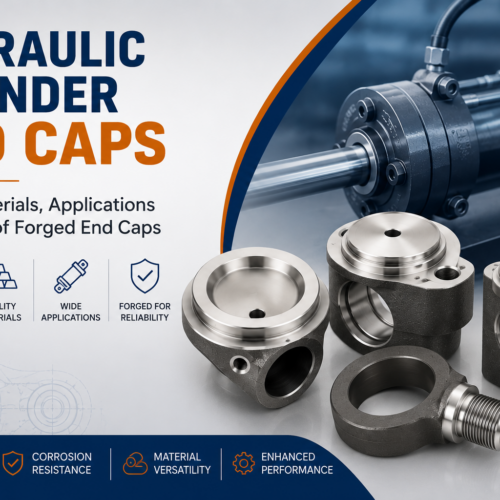
For example, forged hydraulic cylinder end caps can be manufactured where strength, dimensional consistency, and reliable sealing interfaces are important. MTF’s current hydraulic product range specifically includes machined end caps for hydraulic cylinders used in agricultural equipment.
Hydraulic Fittings and Connection Components
Hydraulic fittings, adapters, and connection components can experience mechanical loading and fluid-related forces.
Thread accuracy, sealing surfaces, material selection, and dimensional control are important considerations for these components.
Mounting and Load-Transfer Components
Clevises, brackets, and mounting components connect hydraulic cylinders with machinery.
These components can experience repeated loads, vibration, and impact, particularly in construction, agricultural, mining, and material-handling equipment.
Applications of Hydraulic Forged Parts
The use of hydraulic forged parts extends across industries where hydraulic systems are required for controlled mechanical movement.
Construction Equipment
Excavators, loaders, backhoe loaders, earth movers, and other construction equipment use hydraulic cylinders and associated components for digging, lifting, loading, and positioning.
These machines can expose hydraulic components to repeated movement, vibration, shock, and changing loads.
Mining Equipment
Mining machinery operates under demanding working conditions involving heavy loads, vibration, impact, dust, and extended operating cycles.
Forged hydraulic components can be considered for applications where strength, fatigue resistance, and structural durability are important.
Agricultural Equipment
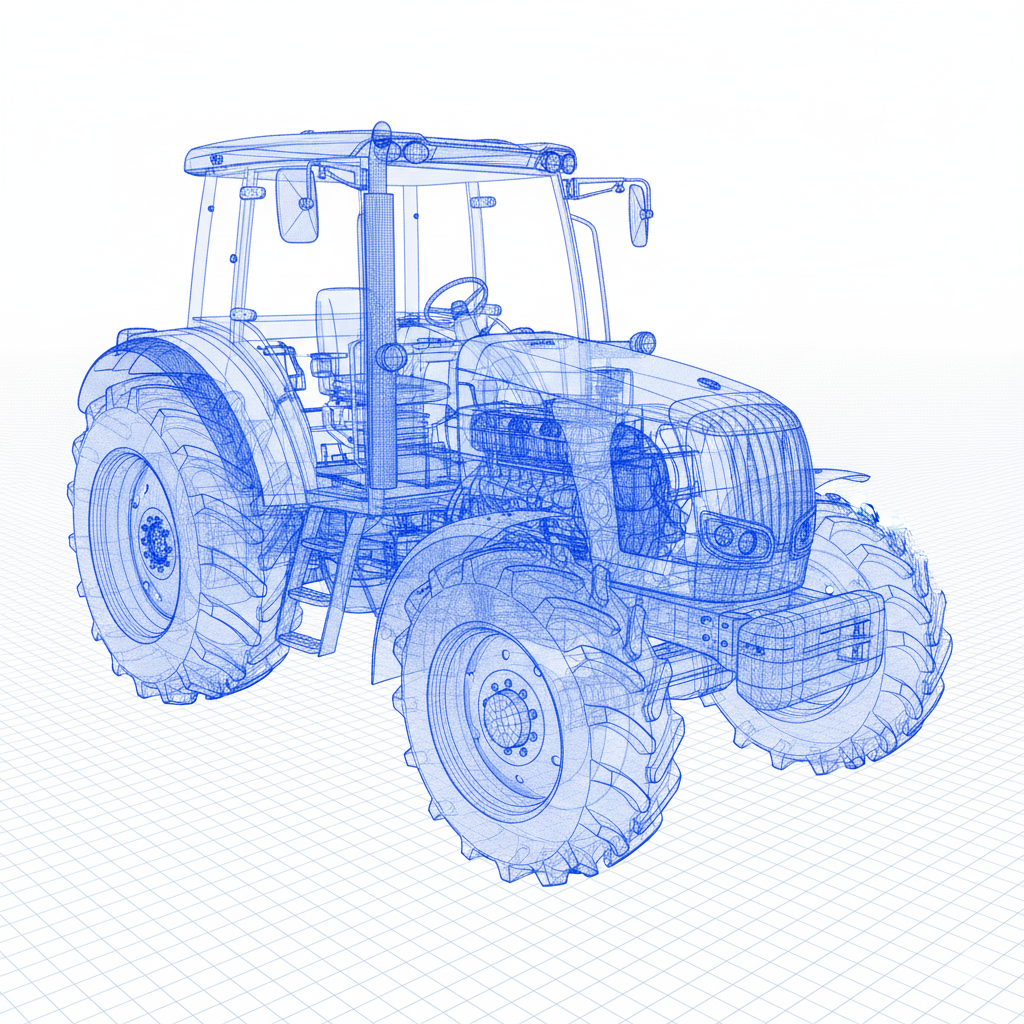
Tractors, harvesters, agricultural implements, and other farming machinery use hydraulic systems for lifting, steering, positioning, and implement control.
Hydraulic components need to maintain consistent performance while operating under changing loads and environmental conditions.
MTF’s current hydraulic product range includes machined end caps used in hydraulic cylinders for agricultural equipment.
Forklifts and Material Handling
Forklifts use hydraulic cylinders for lifting and tilting operations.
Because these functions are performed repeatedly, hydraulic components must be capable of handling continuous load cycles while maintaining proper fit, alignment, and sealing performance.
How to Choose Hydraulic Forged Parts Manufacturers in India
When selecting hydraulic forged parts manufacturers in India, it is important to evaluate the complete manufacturing capability rather than looking only at forging capacity.
Key factors include:
- Forging equipment and capabilities
- Material selection and control
- Die and tooling expertise
- Heat-treatment facilities
- CNC machining capabilities
- Dimensional inspection
- Quality-control systems
- Production repeatability
- Component traceability
- Engineering drawing capabilities
- Experience with hydraulic components
- Experience with construction and heavy-equipment applications
An integrated manufacturing setup can help coordinate forging, heat treatment, machining, and inspection.
For OEMs, this can provide better control over component consistency and simplify sourcing for forged hydraulic components. MTF describes an integrated manufacturing setup covering forging, heat treatment, machining and inspection.
Why Choose Metalic Technoforge for Hydraulic Forged Parts?
Metalic Technoforge manufactures forged and machined components for industrial and engineering applications, supported by capabilities in forging, heat treatment, precision machining, and inspection.
For hydraulic equipment components, this integrated manufacturing approach can support components requiring controlled forging, accurate machining, reliable sealing interfaces, and consistent dimensional specifications. MTF’s hydraulic manufacturing capabilities include closed-die forging, CNC machining, precision turning and milling, grinding, in-house heat treatment, and quality inspection. metalictechnoforge.com
The manufacturing process can be adapted to customer drawings and application-specific requirements, making the company relevant for OEMs and equipment manufacturers sourcing forged hydraulic components.
Frequently Asked Questions About Hydraulic Forged Parts
What are hydraulic forged parts?
Hydraulic forged parts are components used in hydraulic equipment that are manufactured through controlled forging and subsequently finished through processes such as heat treatment, CNC machining, and inspection.
Why is forging used for hydraulic components?
Forging can provide high mechanical strength and structural reliability for components exposed to repeated mechanical loading, vibration, impact, and demanding operating conditions.
Are forged parts suitable for hydraulic equipment?
Yes. Forged hydraulic components can be suitable for hydraulic equipment when the material, component geometry, forging process, heat treatment, machining, and inspection are selected according to the application’s requirements.
Which hydraulic components can be forged?
Depending on their design and size, components such as hydraulic cylinder end caps, cylinder heads, clevises, rod ends, fittings, adapters, and mounting components can potentially be manufactured through forging.
Why is machining required after forging?
Forging produces the basic component shape, while precision machining creates critical features such as bores, threads, grooves, sealing surfaces, ports, and mounting interfaces.
What should I consider when choosing hydraulic forged parts manufacturers in India?
Consider the manufacturer’s forging capabilities, material control, heat treatment, CNC machining, inspection systems, production consistency, engineering capabilities, and experience with hydraulic and heavy-equipment components.
Conclusion
Hydraulic equipment operates through repeated mechanical movement and loading, making component strength, fatigue resistance, dimensional accuracy, sealing performance, and durability important considerations.
This is why hydraulic forged parts are used for a range of demanding applications across construction, mining, agriculture, material handling, and industrial equipment.
Forging can provide the structural foundation for a component, while heat treatment, precision machining, and inspection help achieve the mechanical and dimensional requirements of the finished part.
For OEMs and hydraulic equipment manufacturers, choosing experienced hydraulic forged parts manufacturers in India with integrated manufacturing capabilities can help achieve consistent quality across production batches.
From hydraulic cylinder end caps and cylinder heads to clevises, rod ends, fittings, and mounting components, properly engineered forged hydraulic components can support the reliability and service requirements of modern hydraulic machinery.